

There’s a lot of hand-wringing in academia about the impact of AI on learning.
First, you have the assessment apocalypse. Teachers who relied on take-home essays to determine if a student had learned the material were met with a rude awakening when ChatGPT gave pupils the power to meet the requirements with little more than a prompt.
There is also the problem of productive struggle. Neuroplasticity, the ability of our brain to build new neural pathways, requires effort and challenge. In a society that is chronically stressed and built to reduce friction, AI has been a welcome shortcut. But for many people it shortchanges the work necessary to learn new things.
Professors and pundits see this as a threat to education and are cautioning the public to not learn this way.
Their chicken-little-intoned message that the academic sky is falling sounds like too little, too late for this former teacher. The industrial model of instruction and assessment hasn’t been working for many learners for a long time. The numbers prove it. The biggest fallacy is the belief that all people learn the same.
I know because traditional education didn’t work for me.
And AI definitely does.
I am lucky to be metacognitive and able to think about how I think. And think about how I learn.
About six months of deep learning with AI, and hearing the doom of academics about why I shouldn’t be learning with AI, I started exploring why it works for me, and not others.
I do, we do, you do
This formula is how you teach a new practice.
Imagine learning for the first time how to change a car tire.
You unload the car jack from the trunk, along with the spare tire. Position the jack under the car, lift it, and then remove the bolts securing the wheel until you can remove the wheel and replace it with the spare.
I can do that on my own.
But I first learned by watching my dad do it. At some point, he did parts of it, and I did other parts. Then eventually he watched me do it. And today I do it on my own.
That same process happens when we teach students how to multiply 2 digit numbers by a single digit. The teacher stands at the white board, and walks step by step through the algorithm. Children dutifully copy what the teacher is doing.
Over time, teachers watch students while they do it, and work out the problem together. Until eventually, they are able to finish it on their own.
I do (teacher), we do (class), you do (individual completes it on their own.)
You do, we do, I do
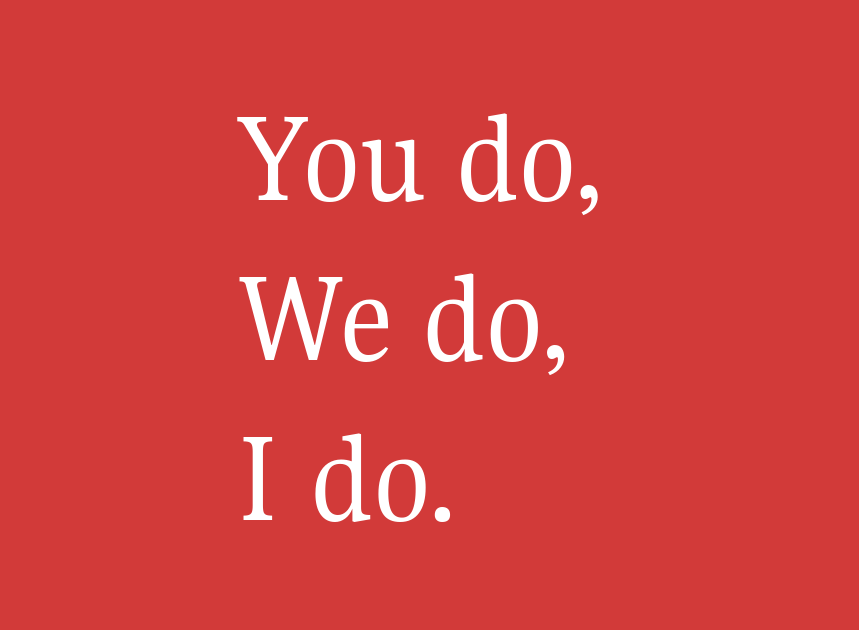
When I reverse engineered how I learn with AI, I discovered I had inverted this process.
A year ago, I used Claude to analyze the data of my travel Substack Zigzag Along with Deana & Jeff. You can learn about the process in this article.

When I started, I didn’t know anything about SQL, ETL or data analytics. I just kept asking questions, and orchestrating my agent to do the tasks. Together we installed MCP servers for python, SQLite, pandas, and more. It wrote the code, built a database, queried it, and provided results.
You do. Claude did all the work. I watched. I was eating tokens and put in timeout like there was no tomorrow.
Then a friend asked:
But how do you know it’s answers are accurate?
And I went off to learn about the technologies that underlie the processes.
The next project was working on analytics for my Linkedin profile. This time, I was more careful about which MCP servers I installed. I upgraded to Postgresql, learned how to use Docker, and installed NocodeDB and Metabase for visualizations.
In the first you do phases, Claude was constantly rewriting the code. This time I installed VS Code, and was looking at what we were doing together.
We do. I researched and learned how to use the technologies that Claude used to build our ETL and analytics process. Token consumption was more modest. Fewer timeouts.
Today, I can install Docker images on my own. I modify files at the terminal without asking for help. I am learning Neo4j for the next database project. And I am rarely talking with Claude about it.
I do. My paid Claude account has actually expired, and I haven’t yet paid for the renewal.
The Future
This inversion of the typical pattern will work under these conditions:
We have to legitimize productive struggle. Teachers and schools need to design environments that reward resiliency, rather than attendance and task completion.
We must teach critical thinking. Everyone says this. It’s not happening at scale.
We must accept that not all people learn the same way. I do not presume that because I can use AI in this inverted manner everyone else can and should. But the education system assumes that people like me should learn how everyone else does.
What about you? How do you learn? I’d love to hear from you. Leave a comment or DM me.